
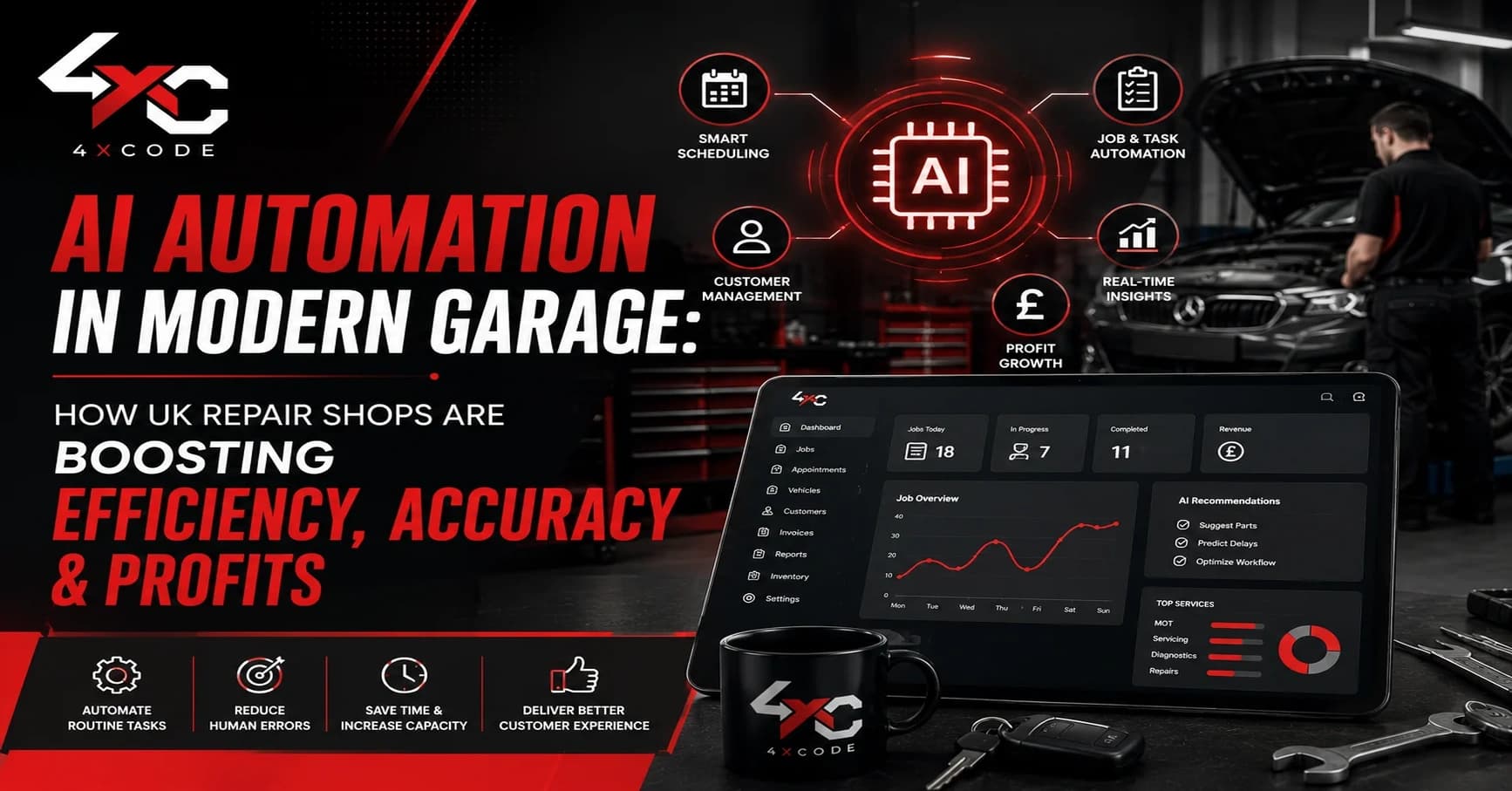
A missed call at 8:47 AM doesn't feel like much. Multiply that by fifteen a week, and it's a lost customer, a lost service booking, and eventually a lost reputation. This is the quiet reality inside thousands of UK garages right now, not a lack of skill on the workshop floor, but a lack of systems behind it.
AI automation in modern garage operations isn't a futuristic concept anymore. It's already running quietly behind the scenes at repair shops that answer calls faster, catch faults sooner, and never let a part shortage delay a job. If you're running a garage in 2026 and still relying on paper job cards, memory-based scheduling, or guesswork inventory counts, you're not just behind, you're leaving money on the table every single week.
This guide breaks down exactly what AI automation means for a working garage, where it delivers the most value, and how to actually implement it without disrupting the shop floor.
What Is AI Automation in a Modern Garage?
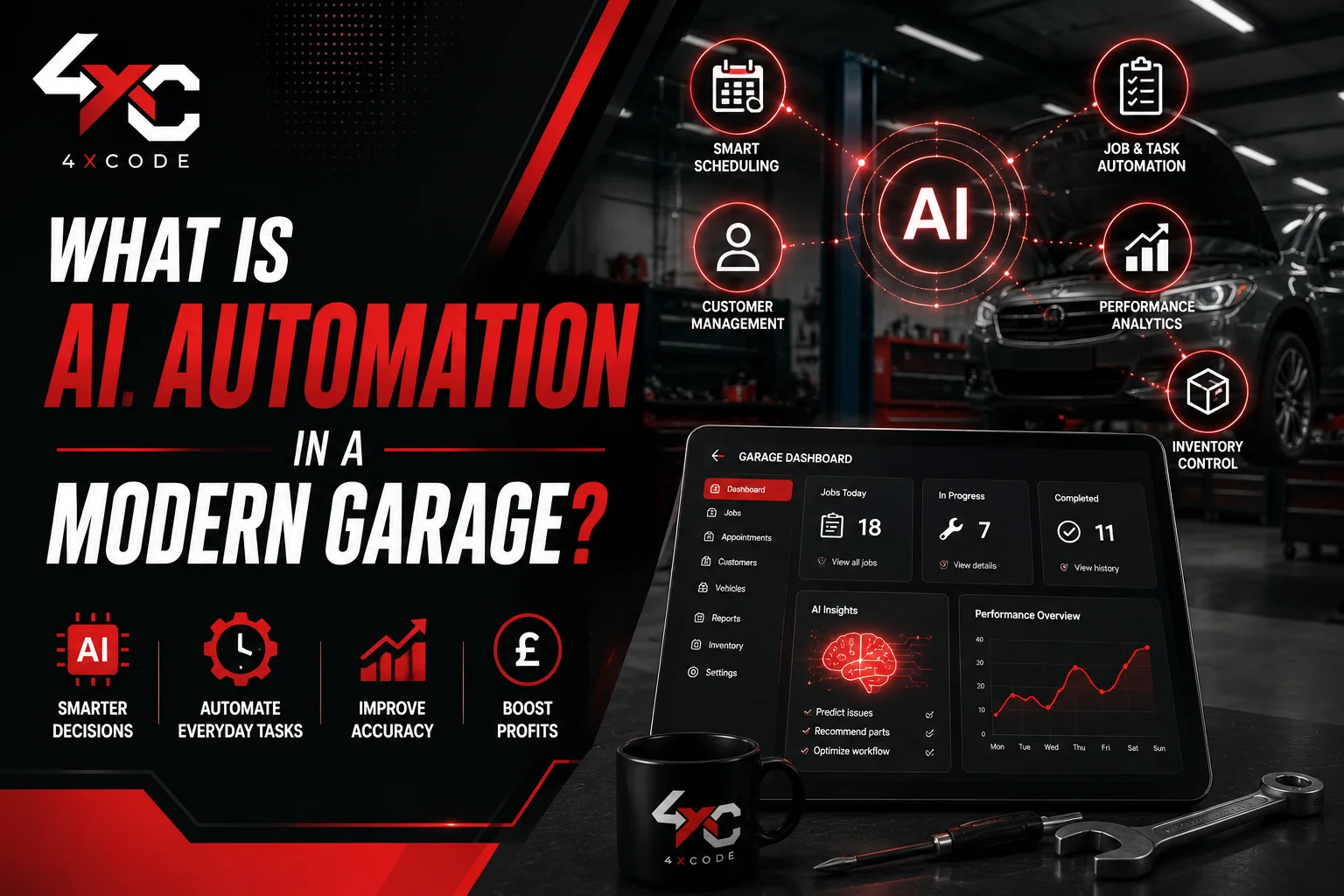
AI automation in a garage refers to software and connected tools that handle repetitive, data-heavy, or time-sensitive tasks, diagnostics, scheduling, customer communication, inventory tracking, without a technician or service advisor manually managing each step.
Think of it as a second set of hands that never gets tired, never forgets a follow-up, and never miscounts stock. It doesn't replace your team. It removes the administrative drag that keeps skilled technicians from doing the work they're actually trained for.
A modern garage using this kind of system typically sees it working across three layers:
- Diagnostic layer reading vehicle data, OBD-II codes, and sensor output to flag issues before they become breakdowns
- Operational layer scheduling, job cards, parts ordering, and workflow management running with minimal manual input
- Customer layer booking confirmations, status updates, and follow-ups happening automatically, in real time
How Is AI Automation Different from Traditional Garage Management Software?
Traditional garage management software digitizes paperwork. It moves job cards from paper to screen, and that's genuinely useful, but it still requires a person to read, decide, and act on every piece of information.
AI automation goes a step further. It interprets data and takes initiative. Where traditional software might store a vehicle's service history, an AI-driven system will actively flag that the same customer's brake pads are statistically due for replacement based on mileage and previous patterns, then draft the follow-up message itself.
The difference isn't cosmetic. One system stores information. The other uses it.
Which Garage Tasks Can Actually Be Automated with AI Today?
Not everything needs a human decision. Here's what's realistically automatable in a working UK garage right now:
- Appointment booking and confirmations customers book online 24/7, no phone tag required
- Diagnostic pattern recognition flagging likely fault causes based on symptom and sensor data
- Parts reordering triggering restock orders before shelves run empty
- Service reminders MOT, servicing, and warranty follow-ups sent without manual tracking
- Call summaries and job notes turning phone conversations into structured, searchable records
- Quote generation producing estimates from diagnostic data in minutes, not hours
Tasks that still need a human: physical inspection judgment calls, customer negotiation on pricing, and final sign-off on repair recommendations. The technology supports the decision, it doesn't make it for you.
Why UK Garages Are Turning to AI Automation in 2026
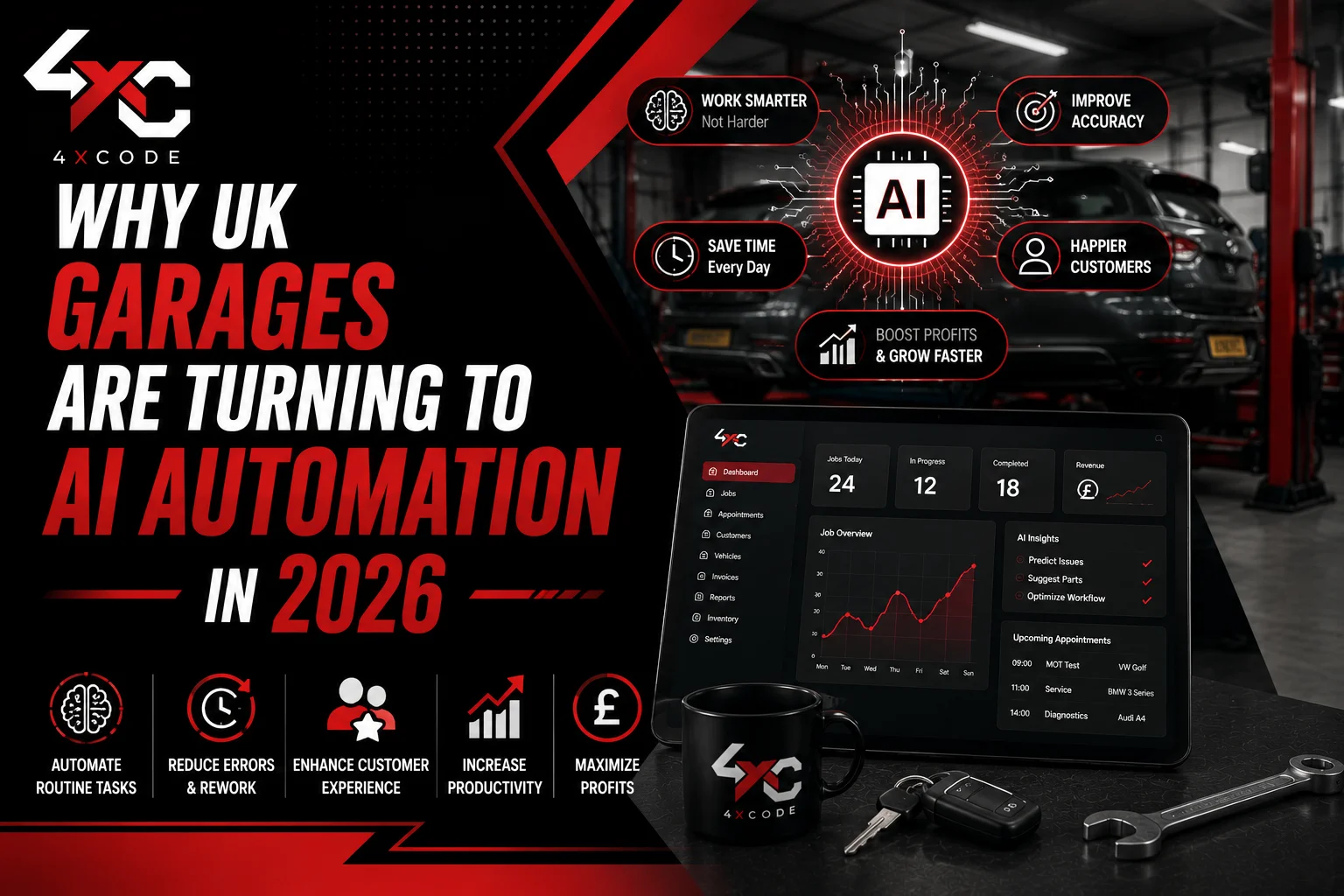
The UK automotive aftermarket has shifted hard in the last two years. Rising EV volumes, tighter margins on parts, and customers who expect Amazon-level responsiveness have made the old way of running a garage genuinely expensive to maintain.
Independent garages are particularly exposed here. A franchise dealership can absorb inefficiency with volume. A five-bay independent workshop cannot.
What Problems Is AI Automation Solving for Repair Shops Right Now?
Three problems come up constantly when garage owners talk about where their time and money actually go:
Missed and unanswered calls. Industry estimates suggest independent garages miss between 15% and 30% of inbound calls during peak hours, each one a potential booking gone to a competitor. AI-driven call handling and online booking close that gap without hiring another front-desk staff member.
Reactive rather than predictive maintenance. Waiting for a customer's car to break down before recommending service isn't just bad for the customer, it's a missed revenue opportunity. Predictive maintenance systems flag wear patterns early, converting "just in case" visits into planned, higher-margin work.
Inventory guesswork. Ordering parts based on habit rather than data leads to two costly outcomes: dead stock sitting on shelves, or a critical part that's out of stock exactly when a job needs it. AI-assisted inventory forecasting solves both by tracking actual usage patterns against job volume.
Is AI Automation Worth It for Small and Independent Garages?
This is the question that matters most, and the honest answer is: it depends on where you start.
A single-bay garage doesn't need a full enterprise platform. What it needs is targeted automation in the one or two areas causing the most friction,usually booking and customer communication first, since those touch revenue directly.
A realistic starting point for a small UK garage:
Garage Size | Recommended First Step | Typical Time to See Results |
| 1–2 bays | Online booking + automated reminders | 2–4 weeks |
| 3–6 bays | Add call handling + basic inventory alerts | 4–8 weeks |
| 7+ bays / multi-location | Full workflow automation + predictive maintenance | 8–12 weeks |
The pattern holds across the industry: shops that start small and expand automation gradually see faster ROI than those trying to overhaul every system at once.
Key Applications of AI Automation Inside a Modern Garage
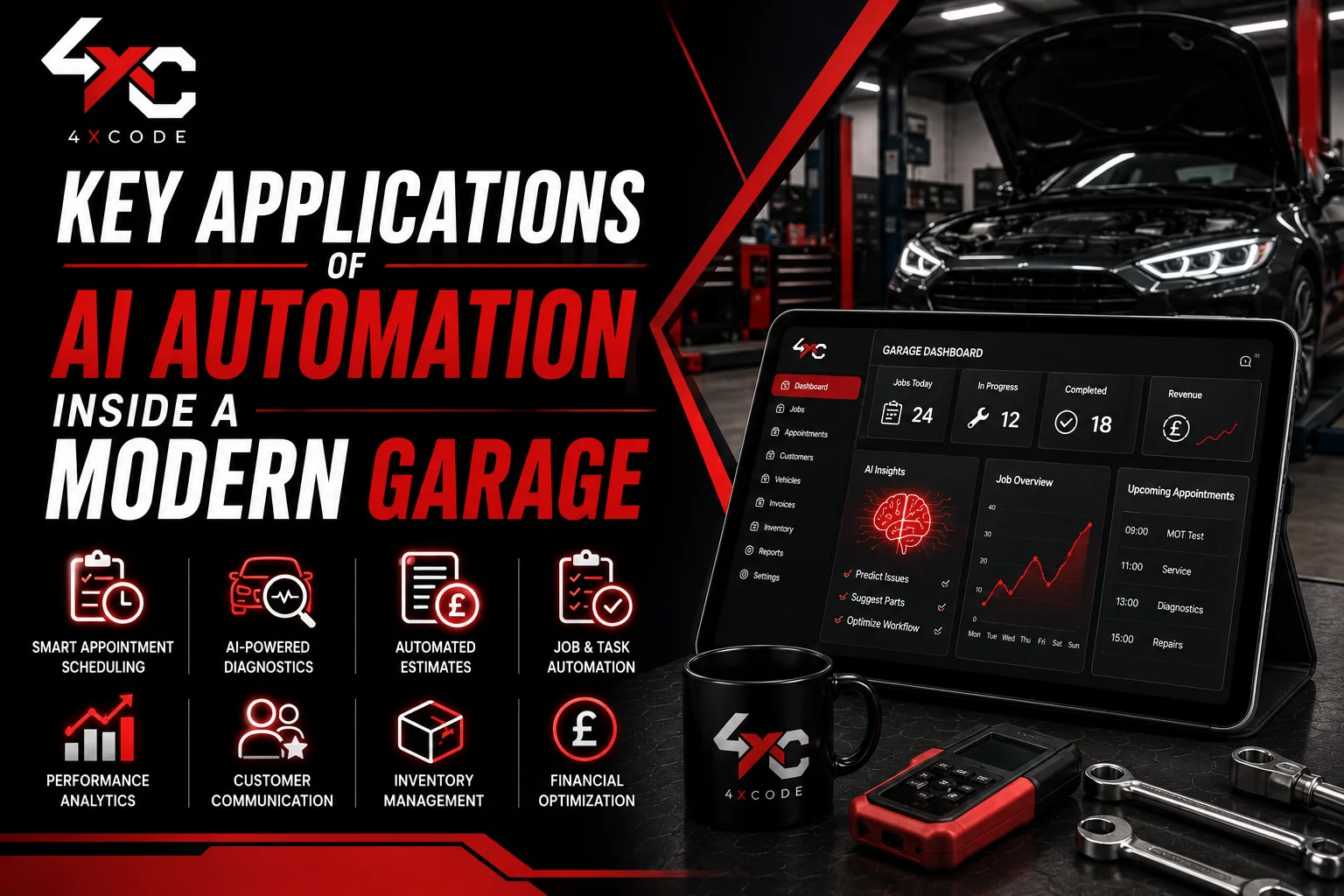
This is where the theory becomes practical. Below are the areas delivering the clearest, most measurable value inside working UK garages today.
AI-Powered Vehicle Diagnostics and Predictive Maintenance
Modern vehicles generate enormous amounts of sensor data, far more than a technician can manually review during a routine inspection. Diagnostic systems built around pattern recognition process that data in seconds, cross-referencing it against known fault signatures across thousands of similar vehicles.
Predictive maintenance takes this further. Instead of waiting for a dashboard warning light, the system identifies gradual wear trends, a battery drawing slightly more current each week, brake wear tracking ahead of mileage expectations, and flags it before it becomes an emergency repair.
How Does AI Diagnose Vehicle Faults Faster Than Manual Checks?
A technician running a manual diagnostic typically works through a checklist, testing components one at a time based on reported symptoms. It's thorough, but slow, often 30 to 60 minutes for anything beyond a straightforward fault.
An automated diagnostic system reads OBD-II data, historical service records, and known fault patterns simultaneously, narrowing the likely cause list before the technician even lifts the bonnet. It doesn't eliminate the need for a hands-on inspection, it just means the technician starts closer to the answer.
Real-world scenario: A garage in Manchester reported cutting initial diagnostic time on electrical faults by roughly 40% after adopting pattern-based diagnostic tools, simply because technicians weren't starting from zero on every job.
AI Scheduling, Booking and Customer Communication
Customer expectations have changed. People want to book a service the way they book a restaurant table, instantly, online, without waiting for a callback.
Automated scheduling systems handle this by syncing bay availability, technician capacity, and parts readiness in real time, so a customer only sees appointment slots the garage can actually deliver on.
How Does AI Reduce Missed Calls and No-Shows in a Busy Workshop?
Missed calls and no-shows share a root cause: poor follow-through under time pressure. When a service advisor is mid-conversation with a walk-in customer, an incoming call often goes unanswered.
Automated systems address this from both directions:
- Inbound calls get answered or logged automatically, with key details captured even if a human callback is needed
- Booking confirmations go out immediately, reducing the ambiguity that leads to forgotten appointments
- Reminder messages typically 48 hours and 2 hours before an appointment, cut no-show rates significantly compared to manual reminder calls
The net effect isn't just fewer missed opportunities. It's a customer experience that feels responsive, which directly supports repeat business and reviews.
AI Inventory and Parts Management
Parts inventory is where a lot of garage profit quietly leaks away, either through overstocking parts that rarely move, or understocking the ones that matter every week.
How Does AI Prevent Parts Shortages and Delays?
Inventory automation tracks real usage data against job scheduling, so reordering happens based on actual demand rather than a fixed monthly cycle. If a garage is booking three brake jobs a week on average, the system flags reorder points before pads run out, not after a technician discovers an empty shelf mid-job.
This matters more than it might seem. A delayed part doesn't just push back one job, it cascades through the day's entire schedule, pushing every subsequent appointment later and frustrating every customer waiting behind it.
Garages using demand-based inventory forecasting typically report fewer emergency parts orders (which almost always carry a price premium) and better cash flow from not tying up capital in slow-moving stock.
How to Choose and Implement AI Automation in Your Garage
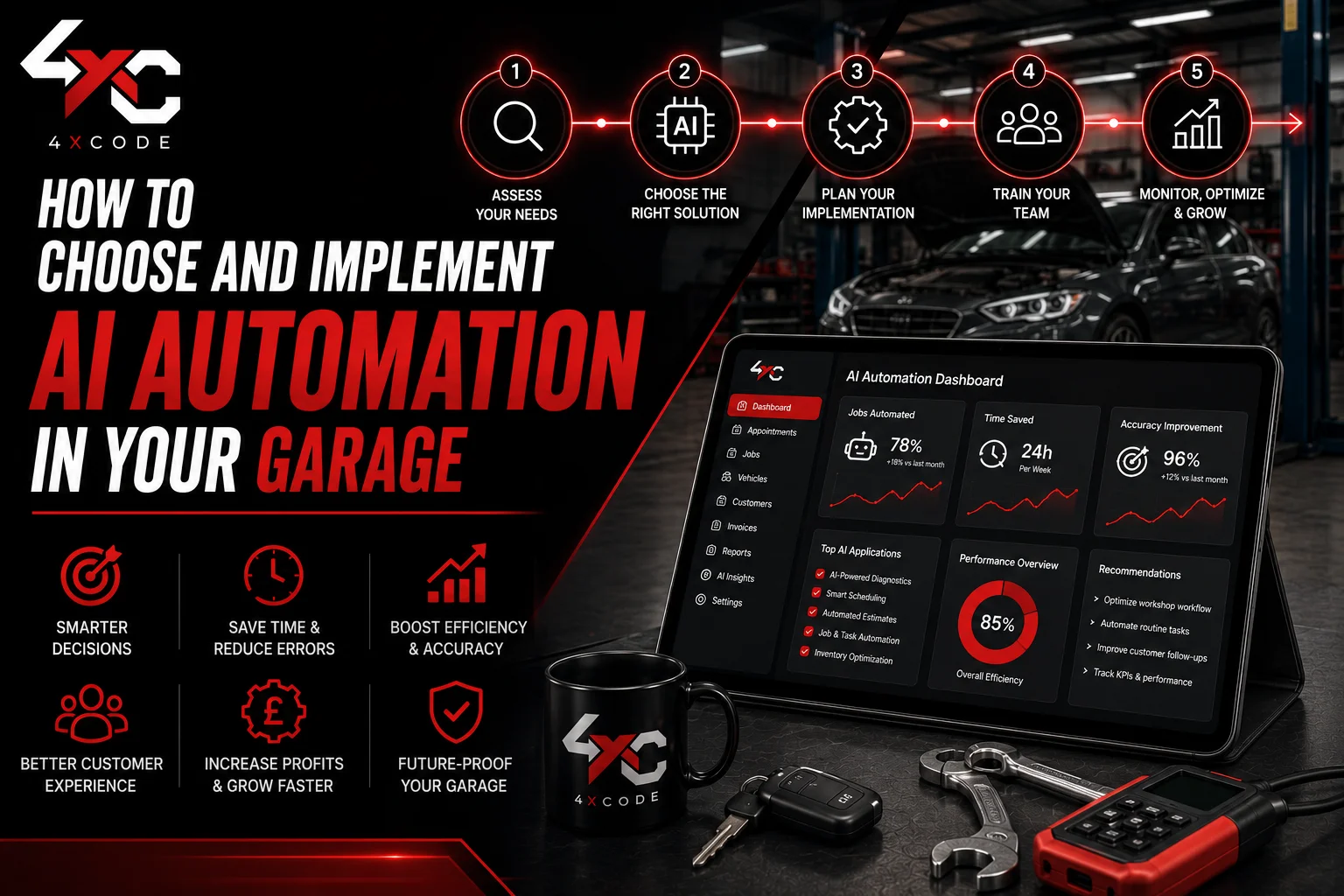
Not every system marketed as "AI-powered" is built for how a real garage actually operates. Choosing the right fit matters more than choosing the most feature-heavy option.
What Should You Look for in AI Garage Automation Software?
Before committing to any platform, evaluate it against these criteria:
- Integration with existing tools does it connect with your current parts suppliers, accounting software, and diagnostic equipment, or will it create a second disconnected system?
- UK-specific compliance does it handle MOT scheduling, VAT-compliant invoicing, and UK data protection requirements correctly?
- Scalability can it grow from a single location to multiple sites without a full platform switch?
- Support and onboarding is there real human support during setup, or is it a self-serve tool with a help article?
- Transparent pricing are you paying for features you'll actually use, or a bundled package with unused extras?
A system that scores well on paper but doesn't integrate with how your team already works will get abandoned within weeks. Fit matters more than feature count.
How Long Does Implementation Take for a Working Garage?
This varies by scope, but most UK garages can expect a phased rollout rather than an overnight switch:
- Week 1–2: Booking and customer communication tools go live first, since they require the least workflow change
- Week 3–4: Inventory tracking connects to existing supplier accounts and historical job data
- Week 5–8: Diagnostic and predictive maintenance tools integrate with existing equipment, with staff training running alongside
Garages that try to implement everything simultaneously tend to see more disruption and slower staff adoption. A phased approach, starting with the highest-friction area, consistently produces better results.
Get Started: AI Automation for Your Garage with 4xcode
At 4xcode, we work with UK garages to implement automation that fits how a real workshop runs, not a generic template built for a different industry. Whether the priority is cutting missed calls, tightening inventory, or catching faults before they become breakdowns, the goal is the same: less administrative drag, more billable hours, and a better experience for every customer who walks through the door.
If your garage is losing time to manual scheduling, inconsistent follow-ups, or reactive parts ordering, it's worth a conversation. Get in touch with 4xcode to talk through what a phased automation rollout would look like for your specific workshop.
Frequently Asked Questions
What is AI automation in a garage?
It refers to software systems that handle repetitive garage tasks, scheduling, diagnostics, inventory, customer communication, using data and pattern recognition, reducing manual admin work for staff.
Can AI diagnose vehicle problems?
AI-driven diagnostic tools can identify likely fault patterns from sensor and OBD-II data, significantly narrowing down the cause of a problem. A technician still performs the final physical inspection and confirms the diagnosis.
Is AI automation worth it for small independent garages?
Yes, particularly when implemented gradually. Starting with booking and customer communication tools typically delivers the fastest, most noticeable return for smaller shops before expanding into diagnostics or inventory automation.
Does AI replace mechanics?
No. It removes administrative and data-processing work so technicians can spend more time on hands-on repair work. Physical inspection, judgment calls, and technical repair skill remain entirely human-driven.
How much does AI garage software typically cost?
Pricing varies widely based on garage size and the number of systems automated. Smaller shops starting with booking and communication tools often see the lowest entry cost, with pricing scaling as more workflow areas are added.
How do I measure ROI from garage automation?
Track missed call rates, no-show percentages, average diagnostic time, and parts stockout frequency before and after implementation. Most garages see measurable movement in these numbers within 4 to 8 weeks.
Running a garage in 2026 means competing against shops that answer every call, catch faults early, and never lose a customer to a scheduling mix-up. The technology to close that gap already exists, the only real question is how quickly you start using it.
If you're ready to see what this looks like for your specific workshop, reach out to 4xcode and let's map out a rollout plan that fits how your garage actually runs.